Tue 09:12
You approve a 600-line diff you only skimmed, because reading it properly would take longer than writing it.
For developers who already work with Claude Code, Codex or Cursor
AI Developer Toolkit is the manual for agentic engineering with Claude Code, Codex and Cursor. Its guides, Setup Pack and books show you how to hand over whole tasks and trust what comes back. You review the spec and the test report. The checks you set up review the diff.
$59.99 once for 12 months of access. Nothing renews on its own. 30-day refund on a first purchase.
One task, start to finish, on a Level 4 setup.
Your attention goes to the spec before the build and the evidence after it. The diff goes to checks you set up once.
TicketIntent
PAY-412
Prorate plan changes made mid-cycle.
You write
SpecIntent
spec.md
Acceptance criteria, edge cases, files the agent must not touch.
38 lines
You write and read
PlanIntent
plan.md
Seven steps. The agent proposes them, you approve before it builds.
Agent writes
BuildLoop
+612 −148
14 files changed in an isolated worktree, until the tests pass.
Agent writes
VerifyVerification
760 changed lines read
Checks read
Pull requestRelease
#1184
Opened with the test report attached. You read it against the spec.
24 lines
You read
Engineering teams at these companies use it
Creator of wondel.ai Skills — 2.3k+ stars on GitHub (opens in a new tab)
Once the agent writes most of the code, you become its full-time reviewer. Every task ends in a diff you either read line by line or approve on trust. Approving on trust is vibe coding. Agentic engineering replaces that trust with checks that can say no.
“You are still responsible for your software, just as before.”
Andrej Karpathy, published transcript of his Sequoia Ascent talk (opens in a new tab), 2026-04-30
“Your life is diffs.”
Tue 09:12
You approve a 600-line diff you only skimmed, because reading it properly would take longer than writing it.
Tue 11:30
Your CLAUDE.md started as a paste from someone’s thread. Nobody on the team knows which lines still do anything.
Tue 14:05
Claude Code, Codex and Cursor each shipped changes this week. You heard about them from a post on X.
From our reader survey
“I switch between Claude Code, Cursor, VS Code, GitHub, and other agents, and often have to explain the same project or problem again.”
A reader, July 2026
What two years of telemetry from 22,000 developers shows
Faros AI, “AI Engineering Report 2026”, April 2026 (opens in a new tab)
+66%
epics completed per developer
+242%
incidents per pull request
+441%
median time a pull request spends in review
Output went up, and so did incidents and review time. The way out is checks that read the code for you, set up once and run on every task. That is what the toolkit teaches.
Dan Shapiro’s five levels describe how much of the work you hand to an agent, from spicy autocomplete to the dark factory. The guides are filed by level, so the next step is always named.
Not sure which row is yours?
The AI Dev Score asks 25 questions in about 8 minutes, names your level and the one move that takes you up a rung. Free.
The dark software factory
“a black box that turns specs into software”
WritesAI
ReadsNobody
The engineering team
“write a spec” … “leave for 12 hours, and check to see if the tests pass”
WritesAI
ReadsTests, mostly
The developer
“Your life is diffs.” … “almost everyone tops out here”
WritesAI, most of it
ReadsYou, full-time
The junior developer
“where 90% of ‘AI-native’ developers are living right now”
WritesYou and the AI, paired
ReadsYou, every line
The coding intern
“you offload specific, discrete tasks to your AI intern”
WritesYou, mostly
ReadsYou, all of it
Spicy autocomplete
“not a character hits the disk without your approval”
WritesYou
ReadsYou
Pick the situation you are in today. Each one has a place to start inside the toolkit.
WhenThe agent’s diffs are bigger than your attention span.
You get The Level 3 to 4 patterns: test gates, Stop hooks, sandboxes and review agents, worked out for Claude Code, Codex and Cursor, so a task ends with evidence instead of a wall of code.
WhenYour agent config is a paste from someone else’s repo.
You get The Setup Pack. Answer 9 questions about your stack and download AGENTS.md, CLAUDE.md, Cursor rules and MCP config from 31 checked servers, plus an install prompt your agent runs to add the Stop hook and check every setting against what you have installed.
WhenThe task is too big to hand over in one prompt.
You get The brief chain: intent.md, spec.md, plan.md. The agent works from a spec you wrote and approved (spec-driven development), in the same order in Claude Code, Codex and Cursor.
WhenThree tools ship changes every week and you can’t keep up.
You get Guides that cover Claude Code, Codex and Cursor side by side, a last-updated date on every page, and What’s New, a feed of what changed and which guides changed with it. What’s New is free for everyone.
WhenYour team works at five different levels.
You get The Team Toolkit covers up to 10 people for 12 months, for $299.99 once: you and up to 9 more, added by email address on your account page. Tech leads also get a reading path and the free Tech Lead Scorecard to place the whole team on the ladder.
WhenThe agent answered with a flag that doesn’t exist.
You get Codex has no --approval-mode flag. The real one is --ask-for-approval, with the values on-request and never (Codex CLI 0.159.2, checked 2026-10-02). The command reference lists stale flags the same way, each with the release it was checked against.
One payment covers the library, the Setup Pack and the books for 12 months.
The eight books, at a comparable ebook’s price$383
The Toolkit, paid once$59.99
400+ guides and 100+ recipes for Claude Code, Codex and Cursor, filed by level, in English and Polish. They show how to write the CLAUDE.md and AGENTS.md files your agent reads, one part of context engineering. Every page shows when it was last updated.
Includedin the Toolkit
Nine questions about your stack, about 20 minutes, one zip generated for your repository. It sets up the harness around your agent, the subject of harness engineering.
Includedin the Toolkit
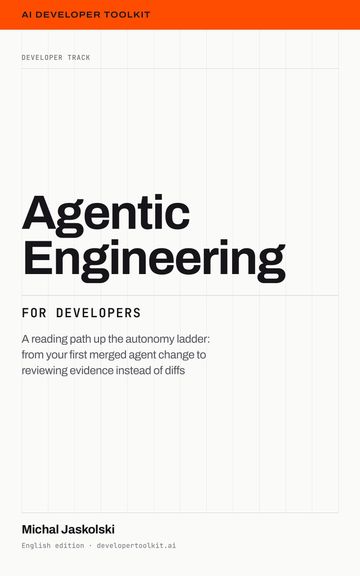
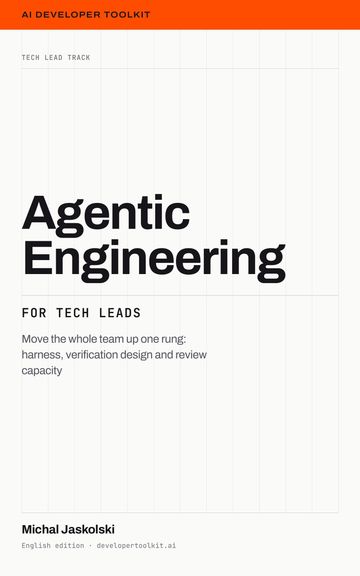
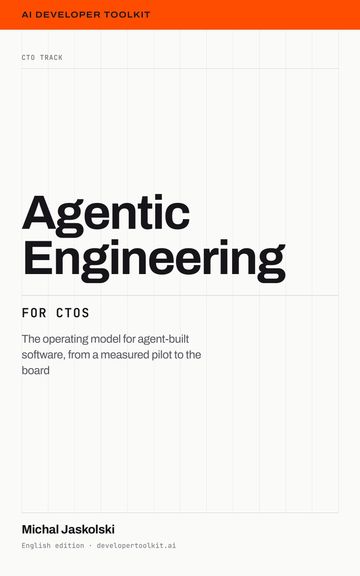
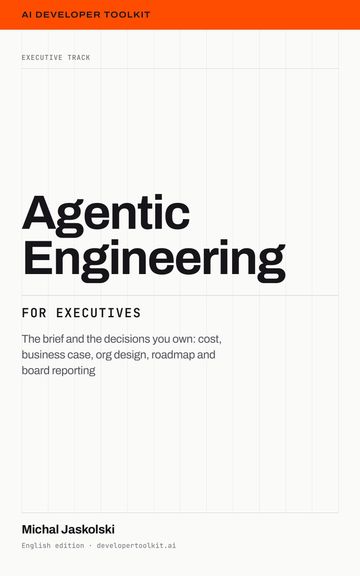
The four-title library, 328 chapters on 3,820 pages, plus four reading paths for developers, tech leads, CTOs and executives. EPUB and PDF, English and Polish. Downloads are yours to keep. See the shelf
$383eight books
Free for everyone, without buying: 5 full articles a month (10 with a free account), the Start here and ladder guides, the three scorecards, the MCP server that lets your agent search the library, What’s New, the Discord for questions, and the public GitHub repo where you report a mistake.
The four library titles run to 3,820 pages, and the four role paths reuse those pages in the order your role needs. At $47.99 each, the typical price of a comparable ebook, all eight would cost $383.
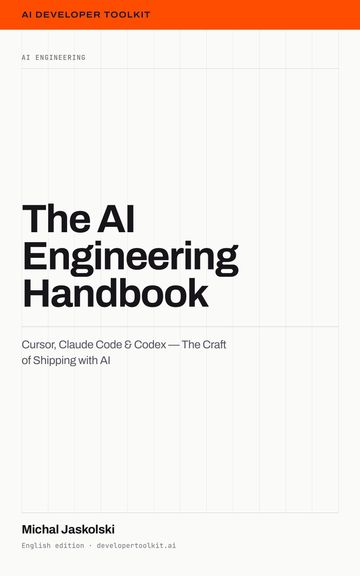
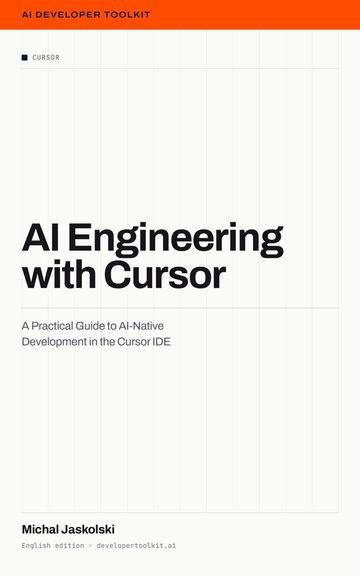
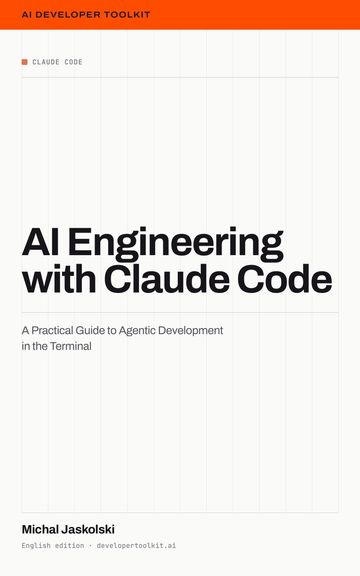
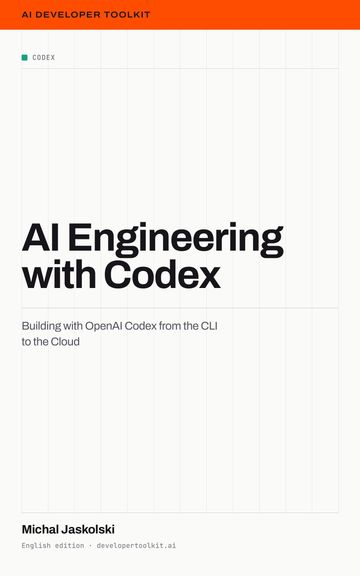
1 / 8
Day 1
Answer nine questions and download the zip. Your agent runs INSTALL-PROMPT.md and checks each setting against the version you have installed. About 20 minutes.
Days 2 to 5
Write intent.md and spec.md for something you were going to build anyway. Let the agent plan, build and stop on the tests. Read the report, then the code if you want to.
By day 30
You have one task done the new way. If that did not change how you work, email support within 30 days of buying for a full refund.
$59.99 once for 12 months of access. Nothing renews on its own. 30-day refund on a first purchase.
# what a model suggested
codex --approval-mode never
# what Codex CLI 0.159.2 accepts
codex --ask-for-approval never
Each guide shows when it was last updated, so you always know how old what you are reading is.
It states the Claude Code and Codex versions behind it, and its table of stale flags gives the release each row was checked against.
The 31 MCP servers in its catalogue were last verified against their upstream sources on 2026-10-02, 31 of 31. A weekly CI run is set up to repeat the check.
Every statistic on this page names its publisher and when it was published. No multipliers that nobody measured.
Every guide has an Improve this page button that opens an issue in the public GitHub repo. When the author confirms it, the guide is corrected and its date changes.
The Toolkit gives you 12 months of access, and nothing renews on its own. Prices in USD. The total for your country, with any VAT or sales tax, is shown at checkout before you pay.
For a developer who wants a working agent setup and every guide for the climb.
$59.99once
12 months. Renew for $29.99 if you want more.
Buy the Toolkit Open your accountPaid once. 30-day refund on a first purchase.
CLAUDE.md, AGENTS.md, Cursor rules, .mcp.json and TESTING.md generated for your stack The same Toolkit for up to 10 people, on one company invoice.
$299.99once
12 months for the team. Renew for $149.99.
Buy the Team ToolkitPaid once. 30-day refund on a first purchase.
Fixed-price work on your repository, delivered by the author.
From $499
excl. VAT, invoiced by Wondel.ai
See services for teamsA free call first
$59.99 for 12 months. Nothing renews on its own.
On a first purchase, for any reason. Email support and it is refunded.
Books and Setup Pack files you download stay yours after the 12 months.
Polar, the merchant of record, sends it right after payment.
Each of these names for building software with AI, and the one that means a different job, has its own page, defined and set against vibe coding.
Vibe coding vs agentic engineering, the long guide All glossary terms
Something else? Write to support@developertoolkit.ai and the author answers.
You can, and the answer will often sound right. Models invent flags: ask for Codex approval settings and you may get --approval-mode, which does not exist. The toolkit keeps a command reference that names the release each stale flag was checked against, and every guide shows when it was last updated.
Official docs describe one tool’s features. The toolkit describes the workflow across all three, filed by level: what to set up, in what order, and how to check the result.
Karpathy published a transcript of his Sequoia Ascent talk (opens in a new tab) (30 April 2026), and one line of it sums up the difference: “Vibe coding raises the floor. Agentic engineering is about extrapolating the ceiling.” In vibe coding nobody reads the diff and no check stands in for the reader. The toolkit teaches agentic engineering: you review the spec and the test report, and checks you set up review the diff.
It starts there and goes further. AI pair programming is the way of working where you read every line the AI writes; AI-assisted coding is the umbrella over all of it, vibe coding included. The guides begin at pairing and move one loop at a time up the autonomy ladder, until checks you set up read the diff for you.
That works. Each guide says which tool it covers, and the workflow is the same order in all three, so moving to another tool later costs you little.
No. You pay $59.99 once for 12 months of access, and you are charged again only if you choose to renew.
Your access ends unless you renew. A renewal costs $29.99 and adds 12 months to your end date, or counts them from today if your access has ended, so renewing early costs you no days. The books and Setup Pack files you downloaded are yours to keep.
Yes, 30 days from your first purchase of the Toolkit or the Team Toolkit, for any reason. Email support@developertoolkit.ai and it is refunded. Renewals are not covered, as set out in the Terms.
Yes. Polar, the merchant of record, issues an invoice with the VAT or sales tax for your country. It arrives right after payment.
Your work moves to the spec, the architecture and the stop conditions. In the published transcript of his Sequoia Ascent talk, Karpathy says you are “in charge of taste, engineering, design, and whether the system makes sense.” The toolkit is about doing those well.
“level 2, and every level after it, feels like you are done. But you are not done”
Dan Shapiro, “The Five Levels” (opens in a new tab), 2026-01-23
$59.99 once for 12 months of access. Nothing renews on its own. 30-day refund on a first purchase.